
DISPATCH FROM BRAZIL

The year that I opened the bookshop, I had the chance to visit some family members in São Paulo, Brazil. I was deep in store research and immersing myself in translated literature, so my attention was on anything and everything bookish. What I found was a city filled with bookstores, public libraries and cultural institutions named for famous authors ... I even stumbled upon a "Clarice Lispector" elementary school! As always happens when I travel, the trip sparked an enduring curiosity in Brazil, and I've been looking forward to bringing more Brazilian authors to readers here in Portland.
So what did our group bring along for the trip?
Hour of the Star by Clarice Lispector
Agua Viva by Clarice Lispector
On Earth As It Is Beneath by Ana Paula Maia
The Posthumous Memoirs of Bras Cubas by Machado de Assis
Macunaíma by Mario de Andrade
Exemplary Humans by Juliana Leite
The Simple Art of Killing a Woman by Patricia Melo
Solitaria by Eliana Alves Cruz
Crooked Plow by Itamar Viera Junior
The Jaguar's Roar by Micheliny Verunschk
Gabriela, Clove, Cinnamon by Jorge Amado
The Discovery of America by the Turks by Jorge Amado
Brazil by John Updike
Having collectively read books from the urban south to the more rural north, from the 1800s to recent releases, we had a lot of ground to cover. Brazil is a BIG country with complicated colonial and racial legacies, and authors certainly lean into these entangled histories and their present-day echoes. From the early days of the nation, many Brazilians have championed a syncretic, multi-racial ideal (the European, African and Indigenous), but how does that play out in a country with deep and continued disparities? There is a legacy in the literary establishment of "whitening" celebrated black and mixed-race authors, aligning them more closely with European peers. Only one reader in our group read a contemporary black author, which isn't surprising when even the sole black winner of Brazil's prestigious Prêmio Jabuti is difficult to find in English.
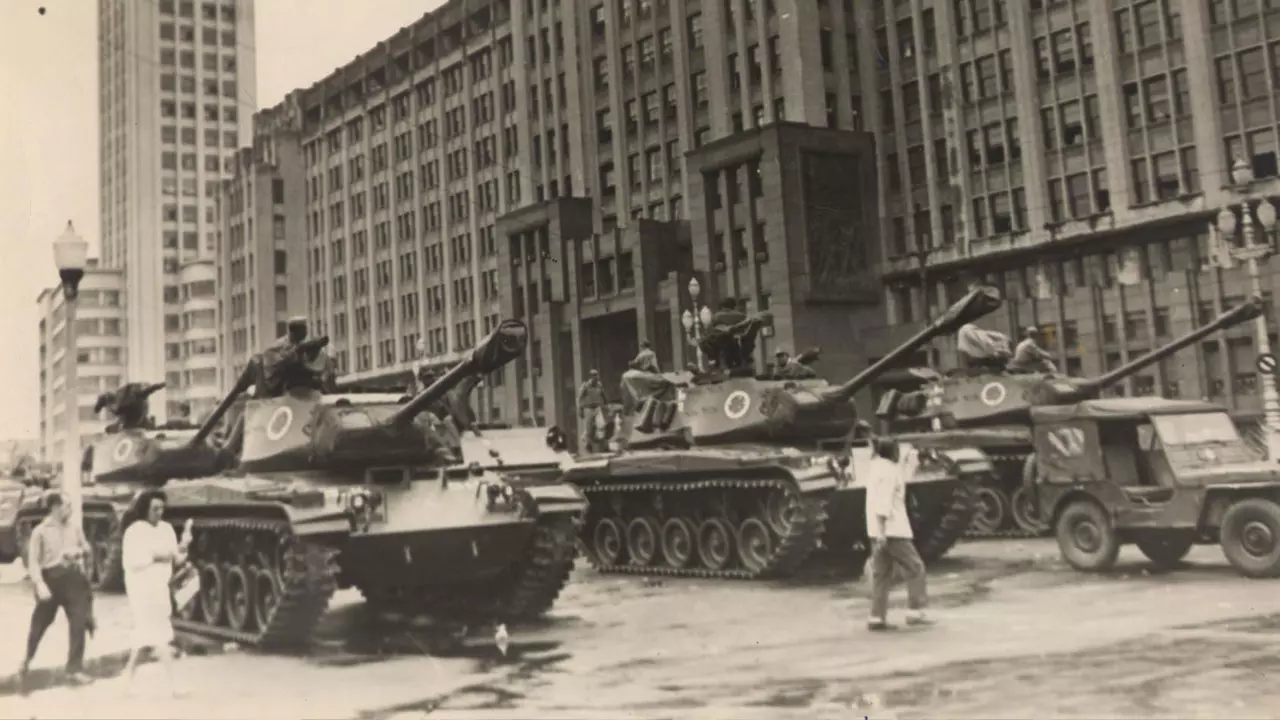
Given that Brazil has some of the highest global rates for gendered violence, we spent a lot of time discussing the treatment of women in the books we read. And some of the worst portrayals were in surprisingly contemporary books. Over half of our group read books by female Brazilian authors, and many of us were drawn to wrestle with Clarice Lispector's beguiling and poetic prose. If you were captivated by her writing, there is a lot more to read, from nonfiction crônicas to even children's books. Beyond this, we talked about nature, folklore, indigenous traditions (Brazil is home to hundreds of native cultures), and the military dictatorship from '64 to '85, which continues to caste a shadow over contemporary political debates.
If you want to continue your Brazilian expedition, we always have a range of stories on the shelves, and I've compiled a bunch of the extra resources below that I found in my research:
Brazil's History is Ahead of It, Not Behind by Geovani Martins, Literary Hub
After returning from São Luís I started thinking of how we Brazilians don’t even know our own country. Especially southerners born in Rio and São Paulo. Representations of Brazil are often centered around these two capitals, so we grow up with only a limited view of our country. Which is why we must be careful of the unusual patriotism growing stronger and stronger here by the day.
Cannibal Modernity: Oswalde de Andrade's Manifesto Antropófago (1928), Hugh Aldersey-Williams, July 31, 2025, Public Domain Review.
But, so far as creating art went, this inclusiveness was the point. Inspiration was to be found not only among Indigenous sources, which would be entirely new to the outside world, but also taken from the European, the African, and indeed anyone at all. This was the cannibalism Oswald de Andrade had in mind.
Clarice: Counting the Years by the Soul, Princeton Brazil Lab, 2022.

To the Beginning of Everything: Elton Uliana on Brazilian Lusophone Prose and Untranslatablity, Alton Melvar M Depanas, November 25, 2024, Asymptote Journal
The Lusophone world touches the Americas, Europe, and Africa, but these historical exchanges were muddied by slavery, genocide, and war, leaving indelible marks on all these different colonized nations. While mutual intelligibility is perhaps never a problem, the two varieties—European and Brazilian—have distinct phonological, lexical, and grammatical features, and of course, there are other varieties from other colonized nations, which are similarly distinctive in their own way.
Another Country: Afro-Brazilian Writing, Past and Present, Eric M.B. Becker and John Keene, December 1, 2018, Words Without Borders.
The problem with how to characterize or define an Afro-Brazilian literature begins with the term itself. Many Afro-Brazilian writers, among them the much-celebrated Conceição Evaristo—the only black writer to win Brazil’s vaunted Jabuti Prize, in 2013—prefer the term black literature (literatura negra) or black Brazilian literature. Some activists have suggested that the term “Afro-Brazilian” is yet another erasure of the black experience, a more palatable denomination aimed at emphasizing the Brazilian element over the black.
Military Dictatorship in Brazil: A History of Violence, Bruno Leal , February 15, 2025, Café Historia.
Censorship stifled dissent: songs, plays, and newspapers were banned, while state propaganda promoted the regime’s “economic miracle.” Despite this, resistance persisted. The Diretas Já movement (1983–1984) mobilized millions demanding direct elections, while labor unions, led by figures like Lula da Silva, organized strikes against wage suppression.
Memorias da Ditadura - online exhibit of materials related to the military dictatorship
Brazilian Cinema Isn't Having a Moment, It's Defining One, Ana Beatriz Reitz Gameiro, February 4, 2026, Service95.
Brazilian cinema resists the temptation of escapism. It does not dwell on what could be, but looks intently at what is and what has been. With intimacy, endurance and restraint, it turns to the mundane, capturing the world as it is: sometimes brutal, sometimes tender, always honest, never melodramatic. In doing so, it speaks directly to audiences, who recognise both its specificity and the universality of human experience – and find it impossible to look away.
Musical Artists Against the Brazilian Military Dictatorship, Camila A Blikstad, November 18, 2021, Northeastern University Political Review.

Gilberto Gil, Aquele Abraço (1969)

Caetano Veloso, Proibido Proibir
Before you go ... it's time to mark your calendars and start your reading for our next book club. Read a book from Italy and join us for the discussion on July 19th!